
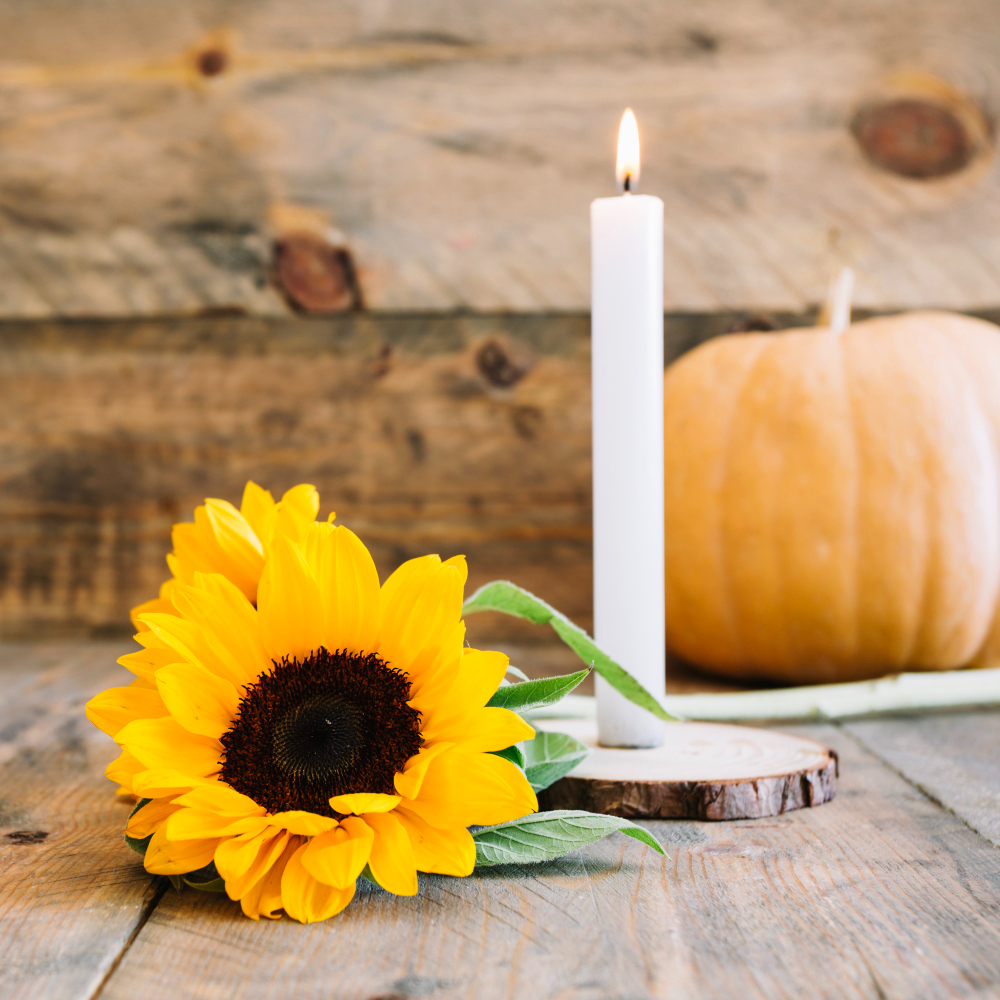
What does the Day of the Dead mean and how does it help people cope with grief? It is a celebration with indigenous and Catholic roots in which families remember their deceased loved ones with offerings, flowers and their favorite food, and the psychology of grief has studied this way of maintaining a bond with those who have died as a possible way of living with loss.
Every year, at the end of October, a different kind of table appears in many Latino homes in Los Angeles, Chicago or Houston. On it are arranged photos of grandparents who never set foot in the United States, a votive candle, a plate of mole or tamales, a beer for the uncle who always asked for one, and cempasúchil flowers bought at the neighborhood supermarket. The children ask who each person is, and the adults tell stories that had not come up in conversation for a long time.
For many immigrant families, the ofrenda is also a bridge to the country they left behind. Remembering those who died far away, sometimes without having been able to say goodbye, takes on a place and a time during these dates. Psychology does not have the final word on a tradition that is, above all, cultural and spiritual, but it can offer some clues as to why remembering together helps so many people, and what studies say about that bond that is not broken by death.
What is the Day of the Dead and what is celebrated?
It is a festival celebrated in Mexico on November 1 and 2 to remember and honor deceased family members and loved ones. According to tradition, on those days the souls return briefly to visit the living.
UNESCO inscribed the indigenous festivals dedicated to the dead on its Representative List of the Intangible Cultural Heritage in 2008, after having proclaimed them in 2003. The organization describes how families scatter petals and place candles and offerings along the path from the house to the cemetery, and how they carefully prepare each deceased person's favorite dishes. It also highlights their origin: the celebration blends pre-Hispanic rites with Catholic festivals that arrived in the sixteenth century, such as All Saints' Day and All Souls' Day.
Far from being a horror festival, the Day of the Dead has a tone of reunion. There is music, food and visits to the cemetery, and death is spoken of with a familiarity that surprises those arriving from outside.
What does psychology say about continuing to remember those who died?
It says that continuing to remember someone is not a sign that grief has stalled. For much of the twentieth century, the prevailing idea was that, in order to overcome a loss, one had to "let go" of the deceased person and break the emotional bond with them.
In the nineties, the book Continuing Bonds (Klass, Silverman and Nickman, 1996) challenged that idea by describing how many people maintain an inner relationship with their deceased loved ones: they talk to them, keep their belongings, follow their advice or feel their presence on significant dates. Since then, maintaining a bond with someone who has died has been considered a common experience and not necessarily problematic. The Day of the Dead gives that bond a collective framework, shared with family and community.
Continuing bonds, an idea that changed the study of grief
These are the ways in which a person maintains an emotional connection with someone who has died, from remembering their words to keeping up their customs. Researchers study them as a model for understanding grief, not as a recipe that everyone should follow.
The evidence is not uniform. A review published in Death Studies (Root and Exline, 2014) points out that studies on continuing bonds have yielded contradictory results: in some people they are associated with greater well-being, and in others with greater distress. The authors propose three factors that could make the difference: whether the person experiences that bond as something positive or negative, what the relationship was like before the death, and what beliefs they hold about the afterlife. Remembering with affection is not the same as being unable to stop thinking about the loss, and that difference matters.
What is the purpose of setting up an ofrenda or an altar?
It serves to give remembrance a concrete place and time, and to share it with others. Each element has a symbolic meaning that families pass down from generation to generation.
A report reviews some of the most common ones: sugar skulls, which represent the people receiving the offering; cempasúchil flowers, whose scent, according to tradition, guides the souls; papel picado; pan de muerto; salt; and photographs. To these are added water, candles and the food each deceased person liked.
From the perspective of psychology, rituals have been associated with relief from sorrow. In three experiments, Michael Norton and Francesca Gino (2014) observed that people who performed a ritual after a loss reported feeling less sadness, and that this improvement was related to a greater sense of control. Preparing an ofrenda turns remembrance into something done with one's hands, in company. On Psicología y Mente you can read more about why farewell rituals help us during grief.
What if my family does not celebrate the Day of the Dead?
No problem: the Day of the Dead is above all a Mexican tradition, and not all Latino communities celebrate it. Many families remember their deceased loved ones in other ways that are just as meaningful.
In much of Latin America, November 2 is celebrated as All Souls' Day with masses and visits to the cemetery. In Guatemala, in towns such as Sumpango and Santiago Sacatepéquez, giant kites are flown on November 1, and many families share fiambre. In Ecuador, colada morada is prepared with guaguas de pan. And in almost every country, the novena and anniversary masses bring the family together to pray and remember. You can learn more about the diversity of funerary rituals in different cultures.
If the idea of an ofrenda appeals to you but it is not part of your tradition, you can approach it with respect, learning about its meaning and avoiding turning it into mere decoration. What helps remembrance is the gesture with meaning, whether it is an altar, a mass, a candle or a family meal.
How to talk about death with children during these dates?
With simple, honest words adapted to their age. These dates are a good opportunity to do so, because death appears at home in a natural way, surrounded by stories and affection.
It is advisable to avoid confusing expressions such as "he fell asleep" or "she went on a trip," which can generate fears or false hopes. You can invite children to choose a photo, draw something for the ofrenda, or ask their grandparents what the person being remembered was like. If they have questions, answer what you know and admit what you do not; it is also fine for them to see you become emotional.
Source: Psicología y Mente. (October 27, 2026). Día de Muertos y duelo: lo que enseña sobre recordar. Psicología y Mente Portal. https://psicologiaymente.com/psicologia/dia-de-muertos-duelo-psicologia